Agencies and staffing firms
You have data, workflows, and margin pressure. We build AI on your data and workflows that wins the margin back.

Sourcing agents, matching engines, and full platforms your firm owns outright. Built in 2–4 weeks by a team on its third recruiting-tech company.
No subscriptions, no seats, no lock-in. Each project is scoped around one outcome and priced before it starts.
You have data, workflows, and margin pressure. We build AI on your data and workflows that wins the margin back.
0 to MVP with a team that has shipped this exact category three times. Your roadmap skips our scar tissue.
Your engineers know your product. We know where recruiting AI breaks in production.
Start from the CRM your team knows, tick the features you need, and see a price range in 2 minutes. Fixed price, no seat fees, and the code is yours.
CRMs we've replaced:
 Case studies
A 3-partner recruiting agency was spending 60% of their time on client hunting, inbound inquiries, and candidate speccing. We built a set of AI agents that automated the workflow and passed only qualified prospects to the partners for demos.
Read the case study Case studies
A resume screening platform had outgrown a single-prompt setup. We migrated it to AWS and rebuilt matching from the ground up with a scalable engine and real scoring logic.
Read the case study
Case studies
A curated talent marketplace needed vetting, skill evaluation, and client-to-talent matching at the core of its product. We built the full AI evaluation layer and shipped the MVP as an embedded product team.
Read the case studyFixed scope, fixed price, running inside your business in 2–4 weeks.
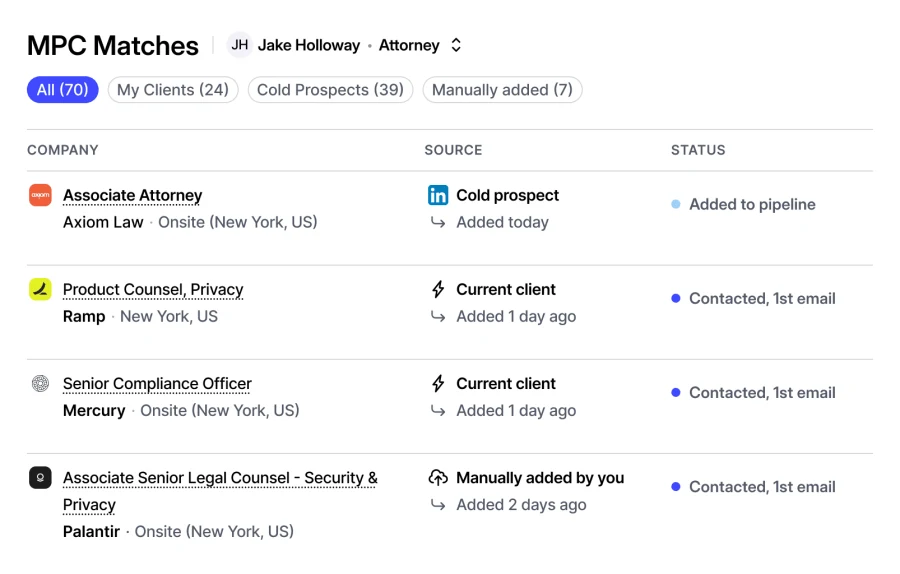
Every new role scored against every candidate you own. Placement history, client feedback, and interview notes carry the signal; the engine learns how your firm places and surfaces matches from data you paid for years ago.
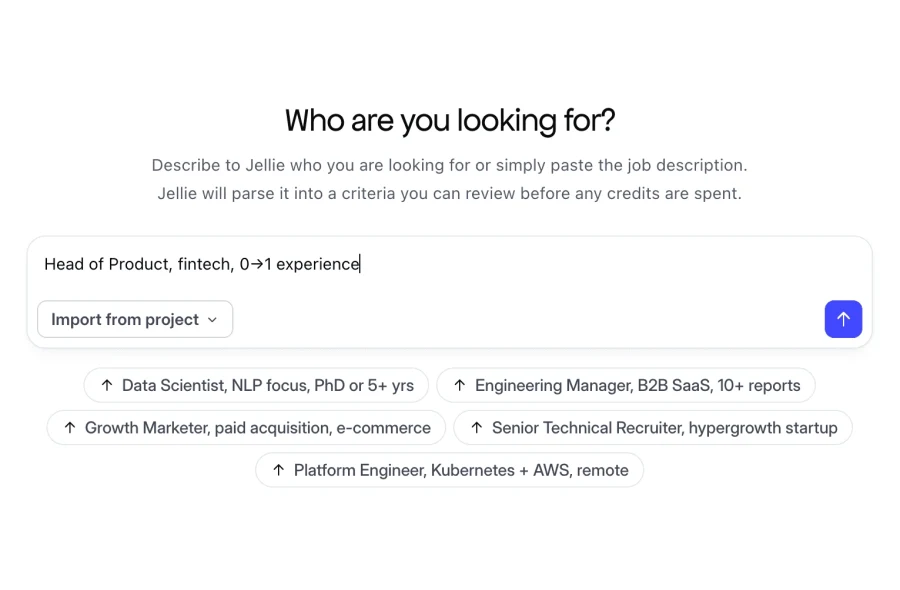
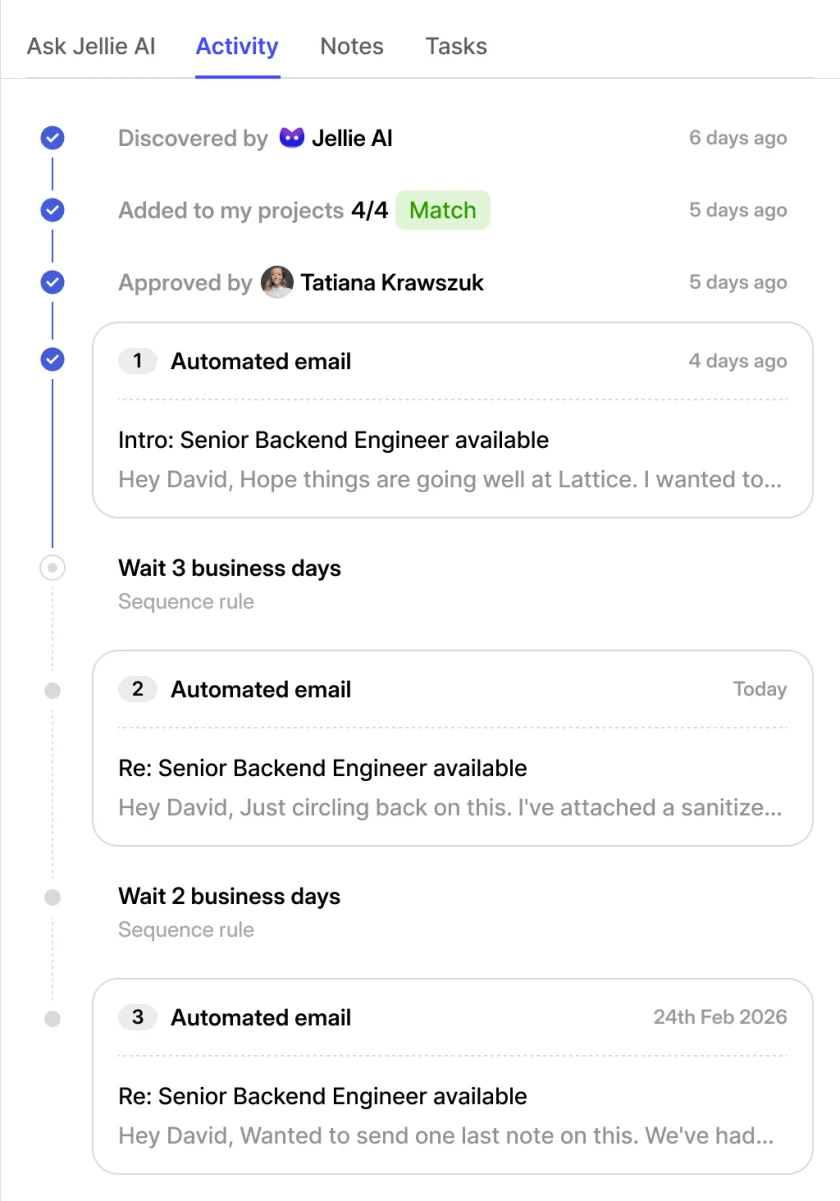
An agent reads the req, searches the market the way your recruiters would, and messages the ten people worth messaging. It runs around the clock. You own it outright.

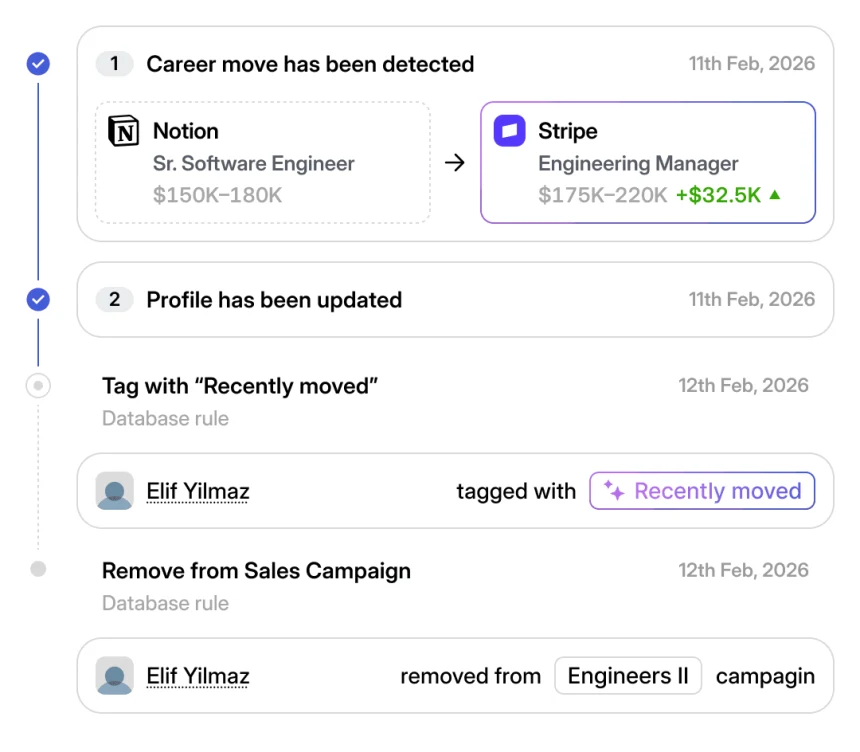
Pipelines that refresh every profile you own. Job changes surface as signals: a candidate back on the market, a past placement now hiring. Run it once or keep it always on.

Ten years of placement history, client feedback, and interview notes carry signal no vendor can sell you. We train matching on it. It learns what a good placement looks like at your firm.

Skill assessments that run the moment a candidate enters your pipeline. Real evaluation of the work they'd do, scored with reasoning your team can audit.

We dig into your workflow, your data, and the outcomes that matter most. 30 minutes, no pitch deck.
Clear scope, fixed price, and a delivery date, usually within 48 hours of the call.
You see working software from week 1, and course-correct while it's cheap.
Production deployment, documentation, and your team onboarded. You own everything.
We know recruiting data, workflows, and where AI pays off, because we've hit most of the pitfalls ourselves.
You work directly with technical founders who have built and sold recruiting-tech companies.
Our own sourcing, matching, and enrichment platform served 60+ agencies in production.
10 years building recruiting tech. We speak ATS, MPC, splits, and pass-through rates. No onboarding required.
Fixed scope, fixed price, weekly demos, and code you own. Nothing ties you to us after handover.
Depends on scope, but every proposal is a fixed price you see before committing, typically comparable to one year of the tool spend it replaces. The scoping call is where you get your number. Building a CRM? Price it in 2 minutes.
You own the code and can run it with any team. Some keep us on for changes and new features, paid by the month and cancellable any time; others take it fully in-house. Both are fine with us.
Yes. We ship alongside in-house teams regularly, as builders or as reviewers of what your team builds.
One 30-minute demo a week and a Slack channel for questions. Your recruiters get involved twice: once at scoping so we learn the workflow, once at handover for training. We're not moving into your calendar.
Yes. Some clients start with a paid architecture review or a one-week feasibility sprint on their data. Small enough to be an easy yes, and we both find out early whether the full build makes sense.
Weekly demos mean you'd know after the first one, not at handover. Scope is fixed, so if we're wrong about feasibility, that's our cost, and we'll say so in the scoping call before you spend anything.
Pick the one that scores candidates against each client's real requirements, finds matches already in your database, and works with the ATS or CRM you run today. Small firms that want an all-in-one ATS usually look at tools like Manatal, Loxo, or Bullhorn. A custom engine suits firms with years of placement history, because it works from that history. Whichever you choose, test it on your own past jobs, and make sure your recruiters can see why it ranked someone. Build vs buy: the full comparison.
Everything runs inside your infrastructure, on your accounts and API keys. We access what the build requires, nothing else, under NDA and a DPA from day one. When the engagement ends, we hold no copies because nothing lived with us to begin with.
Inside your infrastructure, on your accounts, with your API keys. Your candidate data never routes through us.
Builds are designed to your compliance obligations: data minimization, retention rules, right-to-erasure flows, and records of processing where required. As the builder, we make the system capable of compliance; your DPO or counsel confirms your processing basis.
Any system with an API, and several without one. Bullhorn, JobAdder, Loxo, Recruiterflow, plus the long tail. If your data lives in spreadsheets, that works too. The scoping call is where we confirm access paths.
Yes. Many firms keep Bullhorn as the place their data lives and add matching on top of it. We connect to any system with an API, including Bullhorn, JobAdder, Loxo, and Recruiterflow, and score every new job against the candidates you already hold. You skip a data migration, your recruiters keep the screens they know, and you own the engine.
Yes. Half of recruiting runs on spreadsheets. We build on whatever your data lives in.
30 minutes. If we're not the right builders for it, we'll tell you that too.